
It's almost impossible to walk through downtown Bucharest and not smell the aroma of Neapolitan pizza, a pizza made to order, irreconcilably different from the model most of us grew up with, the famous fluffy pizza with everything. But what has now become a fully-fledged trend, which somehow rivals the fame that burgers once had on the local gourmet market, began to be built years ago. And one of the businesses that contributed to this tasty education process is PizzaMania.
"I've always been a pizza fan, I remember that around the age of 5-6 I would eat until I felt like I couldn't anymore. Then, this entrepreneurship thing is a family thing," says Andrei Fâciu, the man behind PizzaMania. At around the age of 12, he started cooking pizza himself, absolutely intuitively, and then, thanks to a context, he went further by laying the foundations of the first wood-fired pizzeria in Vălenii de Munte (Prahova). Yes, the project that contributed to launching the wave of signature pizza in Bucharest wasn't even conceived here, but almost two hours away, in Vălenii de Munte.
"At some point, the issue of the destination of a space that my parents had arose, and that's how we practically started the first pizzeria in Vălenii de Munte, in 2003. At that time, I did what I could, what I actually knew."
But things didn't stay that way, and perhaps it was precisely this passion for pizza, coupled with the desire to learn, that was the most important ingredient in the transformation of PizzaMania.
“In 2015, I was with my wife in London, at the European Pizza & Pasta Show. That was the moment when we realized that we had to learn how to make pizza like the book, so we went to school, at the Accademia Pizzaioli in Portogruaro, somewhere near Venice.” The reason is simple. You can't fake experience, says Andrei.
The next step was to bring the Pizzaioli Academy to Romania. This was followed in 2017 by the opening of the first PizzaMania restaurant in Bucharest, in a villa on Calea Victoriei. Coincidentally or not, 2017 was the year in which the Neapolitan pizzaiolo (the one who makes pizza – ed.) and his craft became UNESCO Intangible Heritage, thus joining the more than 500 traditions from over 120 countries that have received this recognition from UNESCO.
Beyond the correctness of pizza making, PizzaMania also simplified their naming, introducing for the first time a numbering system, now taken over by other initiatives in the field.
"Things should be simple, just like pizzas shouldn't be loaded. You can't feel the ingredients if there are too many. We created our own pizzas, but at the end of the day you can't not have a Margherita on the menu."
In addition, it would have been extremely risky for the business to follow the same recipe, in a market that had grown for years with the same combinations, all far from the original idea of pizza.
"We understood from the very beginning that we couldn't fight with others on equal terms, so we went with our concept."
Flour is the most important ingredient, and for every pizza at PizzaMania, three types of flour are used, taken from a top three producer in Italy. Yeast and a dash of yeast are added for stabilization. Anyone who says they don't use yeast at all is probably lying. "Then we leaven this dough for 24-48 hours, because that's how we learned."
And just as Andrei Fâciu and his wife learned in Italy how to make a real pizza, others learned in the school they opened in Bucharest how to make pizza like in Italy. This transfer of knowledge led to the development of an entire segment, which from a niche has become a trend today, not just in Bucharest.
"Many of the pizza projects that are now successful, including in the province, are based on the courses we organize at the Accademia Pizzaioli. We want the market to develop as well as possible, because there is room for everyone. We have always had the idea of moving those in this field from the wrong boat to our boat, especially after eating unbaked pizza for 25 years."
After all, the pizzaiolo is not a simple baker, but a link in a community that facilitates the exchange of information between generations, which is what happened here too.
"We work with suppliers from Romania who supply us weekly. The market is very well developed, so we have no reason not to collaborate with companies here."
Since they came to Bucharest, the two years of the pandemic have been the hardest.
"In the first months, we were just looking out the window," admits Andrei Fâciu. But then, the team reorganized, personal cars became company delivery vehicles, no one was left on the sidelines.
"If you don't work, you won't get results, no matter what you do."
Today, PizzaMania means the restaurant in Vălenii de Munte, the one on Calea Victoriei, two delivery points, and by the end of the year the brand could become a full-fledged franchise concept. "Now we are preparing for the World Pizza Championship in Rimini, where we are even on the jury," said Andrei Fâciu at the time of this interview.
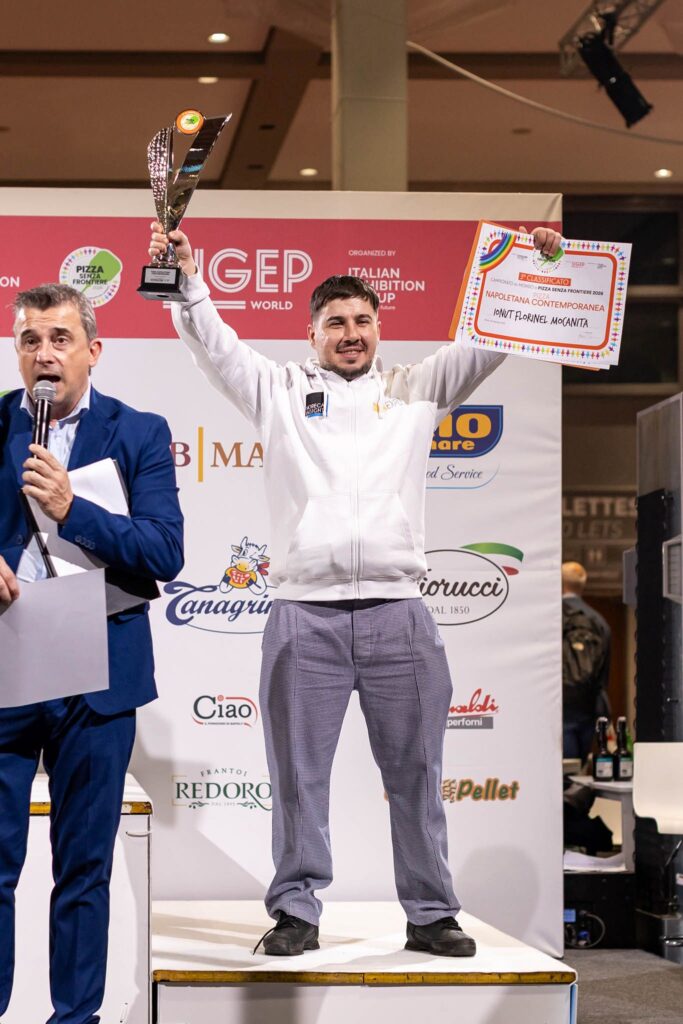
The World Pizza Championship took place from February 19-22, featuring several competitions, almost all of which were sold out. Competition types included Pizza Napoletana Classica, Pizza Napoletana Contemporanea, Pizza al Metro, Pizza Dessert, Pizza Fritta and many more. Each of these shows how much room for growth there is in a market that is just now discovering the true pizza experience.
The journey has just begun.
Link: https://da.zf.ro/dupa-afaceri/gastronomie/pornit-valenii-munte-business-adus-pizza-napoletana-inima-21655673